Friday, February 27, 2009

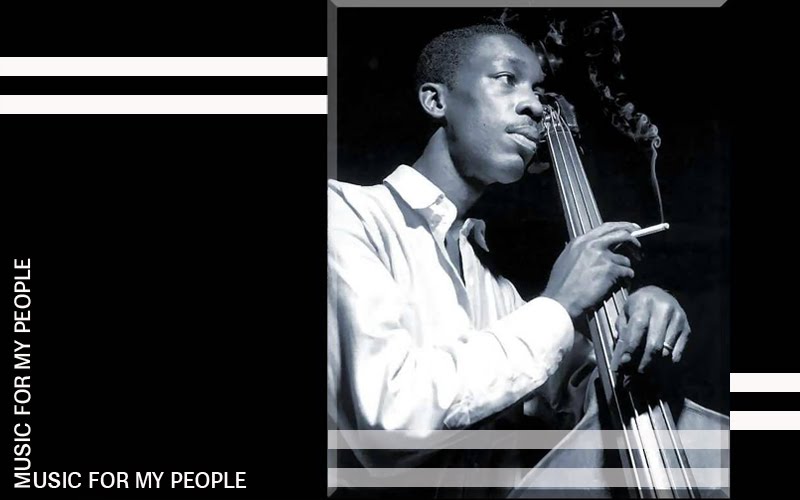
Enrico Pieranunzi, Marc Johnson, Joey Baron - Dream Dance (2009)


Date Released: 20. Januar 2009 
Label: Cam Jazz / CAM 
49:29 Total Length

01. End Of Diversions

02. No-nonsense
 
03. As Never Before
 
04. Castle Of Solitude

05. Peu De Chose

06. Nippono Ya-oke

07. Pseudoscope

08. Dream Dance

09. Five Plus Five

Download

Monday, February 23, 2009

Keith Jarrett trio - Yesterdays (ecm - 2009)


Download

Baptiste Trotignon - Share (2009)


Download

Friday, February 20, 2009

Ennio Morricone - 1988 - Nuovo Cinema Paradiso


Download

Wednesday, February 18, 2009

Julia Hulsmann Trio - The End Of A Summer - 2008


Why do some artists achieve popularity in their own country and fail to make an impression elsewhere, while others cross that boundary with apparent ease? It's easy to argue that there's an "X" factor involved, a singular and identifiable something that allows an Esbjorn Svensson to attain international stature while pianist Julia Hulsmann, with a trio nearly as old as the late Svensson's heralded e.s.t., hasn't managed to break out of her native Germany.

Differentiation is key; equally, exposure is a factor. e.s.t. landed a strong break with its two-album Columbia deal in North America, spending some serious road time in Europe, Canada, and the United States. While three of Hulsmann's first four discs are on the not insignificant German ACT label, they didn't receive the same kind of international push. The End of A Summer, the pianist's first pure trio disc since the indie Trio (BIT, 2003), benefits not only from its wider reach, but from the brand loyalty ECM has built over the past four decades. That The End Of A Summer is deserving of that loyalty only makes Hulsmann and her twelve year-old trio all the more overdue a discovery.

Hulsmann has, in the past, demonstrated a pop sensibility not unlike Svensson's, enlisting singers to interpret pop music by Randy Newman, Nick Drake, and Sting, as well as the oblique poetry of e.e. cummings and the fatalistic Emily Dickinson, supported by Hulsmann's own music. Here, stripped down to its essentials—bassist Marc Muelbauer and drummer Heinrich Kobberling—Hulsmann's trio continues to largely work in song-like miniature, with the disc's ten tracks rarely cracking the five minute mark. Lyricism and introspection define the set, although the trio isn't averse to bursts of energy on Hulsmann's spry "Quint" and more dramatic yet still sparsely populated "Geld," where Muelbauer's pedal point allows the pianist to wax modal, even as the occasional injection of changes lends it more definitive form.

The chemistry is deep and the approach democratic. Muellbauer's robust bass is a melodic partner to Hulsmann's gentle but confident touch on Kobberling's "Where In The World" where the trio subtly stretches and contracts time, underscoring its unshakable forward motion with an understated tension and release. On Hulsmann's more pensive title track and Muellbauer's deceptively idiosyncratic and implicitly swinging "Last One Out," the trio combines generous use of space with thoughtful melodies—at times, near-singable but elsewhere more curious and opaque. Hulsmann demonstrates elegant simplicity and respectful reverence on a tender rework of the Seal hit "Kiss From A Rose" and her own "Senza," adding blue shades to her lengthy solo on the loosely swinging "Not The End Of The World."

Avoiding blatant virtuosity, The End Of A Summer engages, instead, on a deeper, more subconscious level. Profoundly beautiful and possessing a telepathic interaction that can only come from years playing together, this may not be the Julia Hulsmann Trio's debut, but it will be a first encounter for many, and a fine one it is. 


Track listing: The End Of A Summer; Konbwa; Kiss From A Rose; Last One Out; Quint; Senza; Not The End Of The World; Sepia; Geld; Where In The World.

Personnel: Julia Hulsmann: piano; Marc Muellbauer: double-bass; Heinrich Kobberling: drums.

Allaboutjazz.com

Download

Gianluigi Trovesi All'Opera - Profumo Di Violetta - 2008


Personnel:

Gianluigi Trovesi: clarinets, saxophone; Marco Remondini: violoncello; Stefano Bertoli: drums. Filarmonica Mousike: Savino Acquaviva: conductor; Valentina Noris: flute 1; Maurizio Beltrami: flute 2; Lidia Bressan: flute 2;Daniele Cugini: piccolo; Luigi Rapetti: oboe 1; Matteo Donadoni: oboe 2; Giuseppe Cattaneo: English horn; Ugo Gelmi: bassoon 1; Marco Taraddei: bassoon 2; Beatrice Cattaneo: clarinet 1; Luca Garavelli: clarinet 1; Alessio Carrara: clarinet 1; Pierluigi Brignoli: clarinet 1; Federica Salvia: clarinet 2; Stefano Rossi: clarinet 2; Gaudenzio Cattaneo: clarinet 2; Maurizio Biava: clarinet 2; Silvia Banchetti: clarinet 3; Alberto Locati: clarinet 3; Simona Cuter: clarinet 3; Francesco Chiapperini: clarinet 3; Eugenio Capponi: clarinet 3; Luca Bonaldi: piccolo clarinet; Roberto Bergamelli: bass clarinet; Claudio Acerbis: contralto saxophone 1; Michele Margosio: contralto saxophone 2; Dario Zanni: tenor saxophone; Mario Mafeis: baritone saxophone; Rocco Guerini: trumpet 1; Roberto Maffeis: trumpet 1; Fabio Brignoli: trumpet 2, flugelhorn solo (9), trumpet solo (21); Alessandro Salvi: trumpet 2; Daniele Pezzoli: trumpet 3; Stefano Carrara: trumpet 3; Diego Ottolini: trombone 1; Davide Biglieni: trombone 2; Maurizio Bazzana: trombone 3; Gianluca Tortora: trombone 3; Simone Maffioletti: trombone 3; Allesandro Valoti: horn 1; Franscesca Acerbis: horn 2; Frederica Bergamelli: horn 2; Fulvio Comminelli: horn 3; Francesco Peracchi: horn 4; Fulvio Pezzoli: horn 4; Adamo Carrara: euphonium; Mauro Cadei: tuba; Davide Viada: tuba; Fabio Pagani: tuba; Diego Bombardieri: percussion; Raffaele di Diola: percussion; Michaelangelo Donadini: percussion; Matteo Verzeroli: percussion; Paolo Pezzoli: percussion.

IL PROLOGO
Alba

IL MITO
Toccata
Musa
Euridice
Ninfe avernali
Ritornello
Frammenti orfici

IL BALLO
Intrecciar Ciaccone

IL GIOCO DELLE SEDUZIONI
“Pur ti miro”
“Stizzoso, mio stizzoso”
Vespone

L’INNAMORAMENTO
Profumo di Violetta Part I
“Ah, fors’и lui che l’anima”
Profumo di Violetta Part II
Violetta e le altre

IL SALTELLAR GIOIOSO
“И Piquillo, un bel gagliardo”
Salterellando
Antico saltarello
Salterello amoroso
“Largo al factotum”

LA GELOSIA
Aspettando compar Alfio
“Il cavallo scalpita”

L’EPILOGO
Cosм, Tosca

Recorded September 2006
ECM 2068 

Download

Wednesday, February 11, 2009

Piazzola/ Borges - El Tango 1965


Tracks:

1. El tango
2. Jacinto Chiclana
3. Alquien le dice al tango
4. El títere
5. A don Nicanor Paredes
6. Oda intima a Buenos Aires

El hombre de la esquina rosada
(A suite for 12 instruments, narrator, and singer.)
7. I. Aparición de Rosendo
8. II. Rosendo y la Lujanera
9. III. Aparición de Real
10. IV. Milonga nocturna
11. V. Bailongo
12. VI. Muerte de Real
13. VII. Epílogo

Musicians:

Astor Piazzolla -- Music, arrangements, and direction
Jorge Luis Borges -- Texts
Edmundo Rivero -- Voice
Luis Medina Castro -- Reading poems
Daniel Binelli -- Bandoneón
Jaime Gosis -- Piano
Oscar Lopez Ruiz -- Guitar
Roberto Di Filippo -- Oboe
Margarita Zamek -- Harp
Antonio Yepes -- Percussion and vibes
Leo Jacobson -- Percussion
Antonio Agri -- Violin
Hugo Baralis -- Violin
Mario Lalli -- Viola
Jose Bragato -- Cello
Kicho Diaz -- Bass


Astor Piazzolla:
Before commenting on this record's music I would like you to know what it means to me to be a collaborator of Jorge Luis Borges. The responsibility has been big, but even larger the compensation when I learned that a poet of his magnitude identified himself with all my tunes -- and it will be even greater if you share that feeling.
The music for "El hombre de la esquina rosada" was composed in march, 1960, in New York City. The work came out of an idea by choreographer Ana Itelman, who adapted sentences from Borges' short story. The score is for narrator, singer, and 12 instruments.
The musical treatment ranges from the simplest tango essence to hints of dodecaphonic music.
The music for Jorge Luis Borges' poem "El Tango" has been especially composed following and respecting its contents. This gave me the opportunity to experiment with aleatoric music in the percussion scores. The recording has been made exclusively by my quintet, which means noises you hear were made solely with their instruments. The violin produces a percussive effect by hitting the end of its handle with a ring, doing "pizzicati" with "glissé," imitating a siren with a "glissé" on the string, imitating sandpaper with the end of the bow behind the bridge and a drum by doing "pizzicati" with the nails between two strings. The electric guitar imitates a bongo, sirens with "glissé" effects, add minor seconds and strange effects with six strings open behind the bridge. The pianist hits treble and bass notes with the palms of his hands, and with his fists on the lower notes. The bassist hits the back part of his instrument with the palm of his hand, makes "glissés" on the bass strings and hits four strings with his bow. Bandoneón imitates a bongo by hitting the box with the left annular finger. It also has, on a side, a sort of metallic guiro to be scratched with a nail. All these effects were improvised to introduce so-called aleatoric music into tango.
The milonga "Jacinto Chiclana," the tango "Alguien le dice al tango," and the tango-milonga "El títere" are the simplest tunes in this recording. Simple because they simply follow the spirit of Jorge Luis Borges' poems.
"Jacinto Chiclana" has the spirit of a milonga played with guitar, that is, the type of improvised milonga.
"Alguien le dice al tango" can be considered, melodically and harmonically, within the 1940s style, and "El títere" could be defined as the prototype of light, joyful and "compadrón" rhythm of the turn of the century.
Due to its dramatic contents, I have composed "A don Nicanor Paredes" on an 8-bar measure of Gregorian chant and resolving the melodic part without artificial modernism -- everything very simple, deeply felt and honest.
The "Oda intima a Buenos Aires," composed for singer, narrator, choir and orchestra, is perhaps the most audacious of all tunes for singing. Despite that, its melodic line is simple. It begins in ascending chromatic mode and ends up in descending chromatic mode.
To all . . . my thanks for having the opportunity to make this record.
Astor Piazzolla

Link